Application-Led Engineering
Treatment solutions selected around water quality, process requirements and actual operating conditions.
Learn More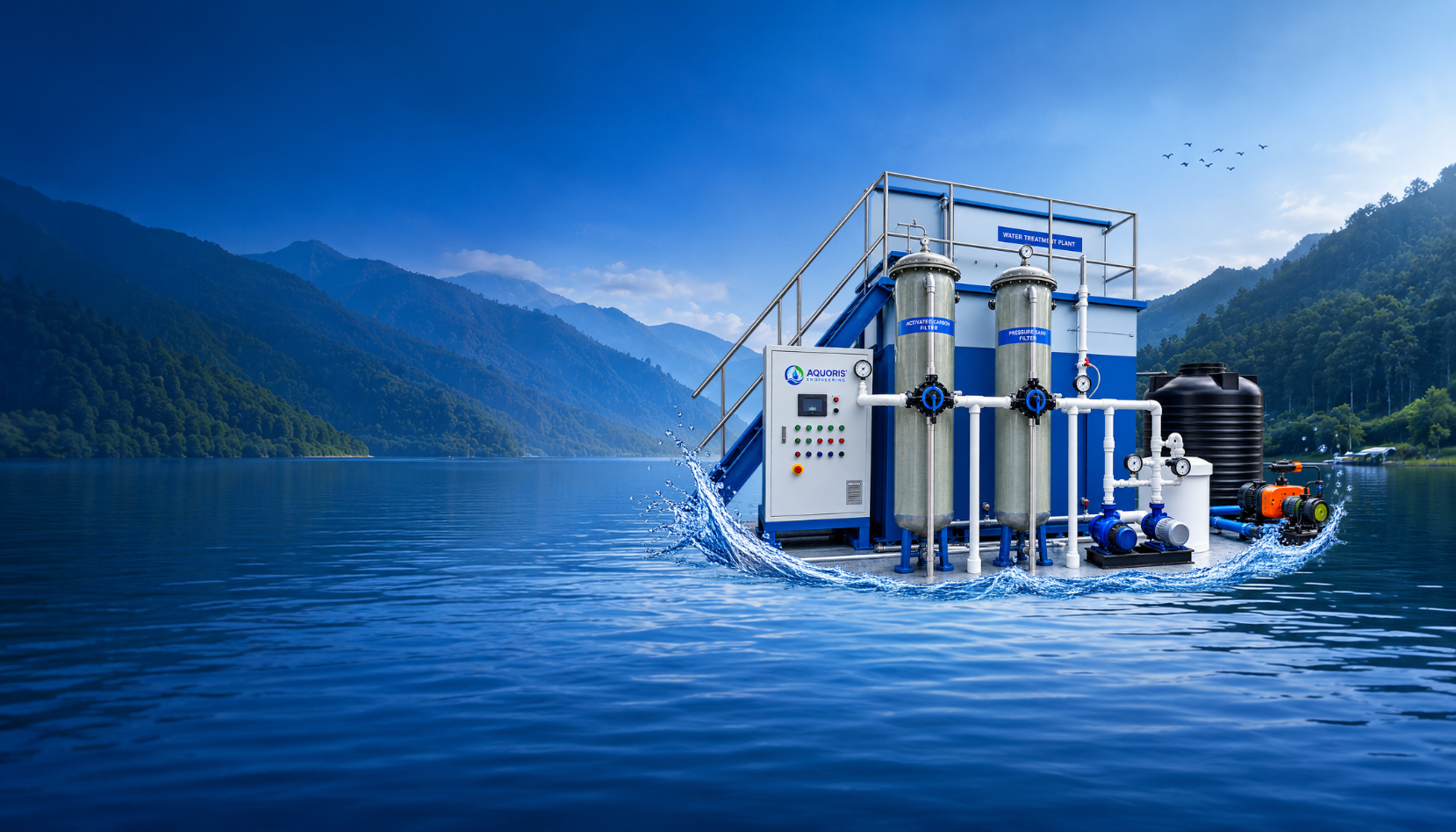
AQUORIS Engineering designs, supplies, installs, commissionsand supports water and wastewater treatment systems engineeredaround source-water quality, site conditions, treatment objectivesand long-term operating requirements.
Treatment solutions selected around water quality, process requirements and actual operating conditions.
Learn MoreIntegrated engineering, procurement, installation, testing and commissioning support.
Learn MorePreventive maintenance, operational review and technical support for reliable plant performance.
Learn MoreTreatment strategies focused on responsible water use, recovery and sustainable operation.
Learn MoreAbout Us
AQUORIS combines practical water-treatment expertise with long-term customer support, so every project is designed for performance beyond commissioning.
To become a trusted water and environmental engineering company recognised for technically sound, sustainable and reliable treatment solutions.
To design and deliver high-quality water and wastewater treatment systems while providing customers with dependable engineering, installation and lifecycle support.
Our Values
These principles guide how AQUORIS evaluates projects, designs systems and supports customers after handover.
We recommend treatment processes based on project data, required output and actual operating conditions.
We remain accountable for the quality of our engineering, documentation and project execution.
We prioritise proven treatment principles, maintainable equipment and stable plant operation.
We promote water conservation, responsible reuse and efficient use of resources.
We consider safe access, chemical handling, electrical protection and maintenance requirements.
We communicate clearly and support customers from assessment through long-term operation.
Core Solutions
From raw-water treatment and membrane filtration to wastewater treatment, recycling and reuse, AQUORIS develops application-specific systems around water characteristics, required capacity, treated-water objectives and operating conditions.
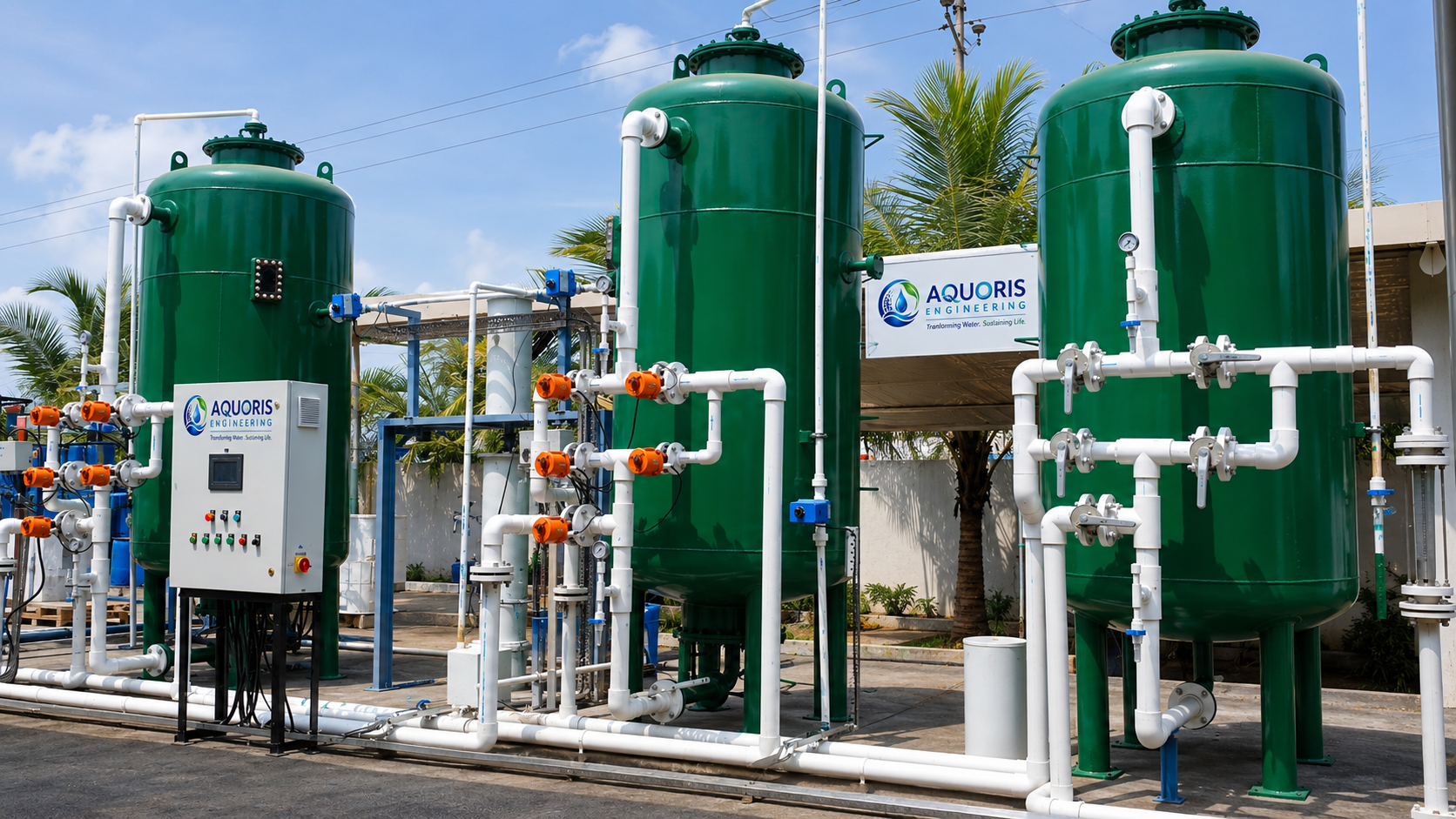
Groundwater and surface-water treatment systems configured around source-water analysis, contaminants, required capacity and treated-water application.
UF and MF systems for particulate removal, pretreatment, process-water applications and tertiary polishing.
Membrane-based treatment systems for dissolved-solids reduction, process water, potable applications and treated-water quality improvement.
Industrial wastewater treatment systems selected around wastewater characteristics, process requirements, discharge standards and reuse objectives.
Compact and conventional sewage-treatment systems for residential, institutional, hospitality, commercial and community applications
Integrated treatment trains for recovering usable water from sewage, effluent and selected process streams.
Why AQUORIS
AQUORIS combines application-focused engineering with disciplined project execution and lifecycle technical support to deliver treatment systems designed for reliable operation.
Processes and equipment selected around project data and defined treatment objectives.
Maintainable treatment systems and practical plant configurations for long-term operation.
Water conservation, treatment efficiency and reuse considered wherever technically appropriate.
Clear communication and technical support from requirement assessment through plant operation.
Projects across Northeast India can involve challenging terrain, seasonal changes in source-water quality, remote locations and limited access to specialist maintenance support.
AQUORIS considers these conditions from the design stage through equipment selection, plant layout, automation, commissioning and lifecycle-support planning.
NE
Terrain, access and maintenance planning built into the engineering brief.
Equipment arrangement and plant access planned around installation, operation and maintenance requirements.
Treatment selection considers changes in source-water characteristics and operating conditions.
Automation, maintainability, documentation and service planning support reliable long-term operation.
We support projects from initial water assessment and process design through equipment supply, installation, commissioning and long-term technical support.
Understanding water/wastewater characteristics, client requirements, site conditions and treatment objectives.
Process design, equipment selection, hydraulic design, P&ID, layout and customized treatment solutions.
Supply of quality treatment equipment, systems, instruments and associated components.
Mechanical, electrical, piping, instrumentation and professional site installation.
Equipment testing, trial operation, process optimization and performance commissioning.
O&M support, AMC, troubleshooting, preventive maintenance, process optimization and technical support.
Industries We Serve
Project Services
The service model keeps technical review, execution discipline and operating support connected from assessment to long-term improvement.
Defined Project Scope
Clear inputs, deliverables and commissioning expectations.
Maintainable System Design
Layouts, utilities and controls planned for practical operation.
Lifecycle Technical Support
AMC, O&M review and retrofit planning after handover.
Review of water/wastewater data, capacity, operating requirements and treatment objectives.
Process selection, flow development, equipment sizing, plant layout and technical specifications.
Coordinated engineering, procurement, installation, testing and project execution.
Installation verification, flushing, testing, instrument checks, trial operation and handover.
Preventive maintenance, operational review, consumable planning and performance support.
Capacity enhancement, process correction, automation upgrades and equipment replacement.
Specialised Water Systems
Design, filtration, circulation, disinfection, equipment supply, installation and technical support for residential, hospitality, institutional and public-space water features.
Contact Us